
Suffering for Suffrage
Suffs Tells the Story of a Movement and Its Challenges

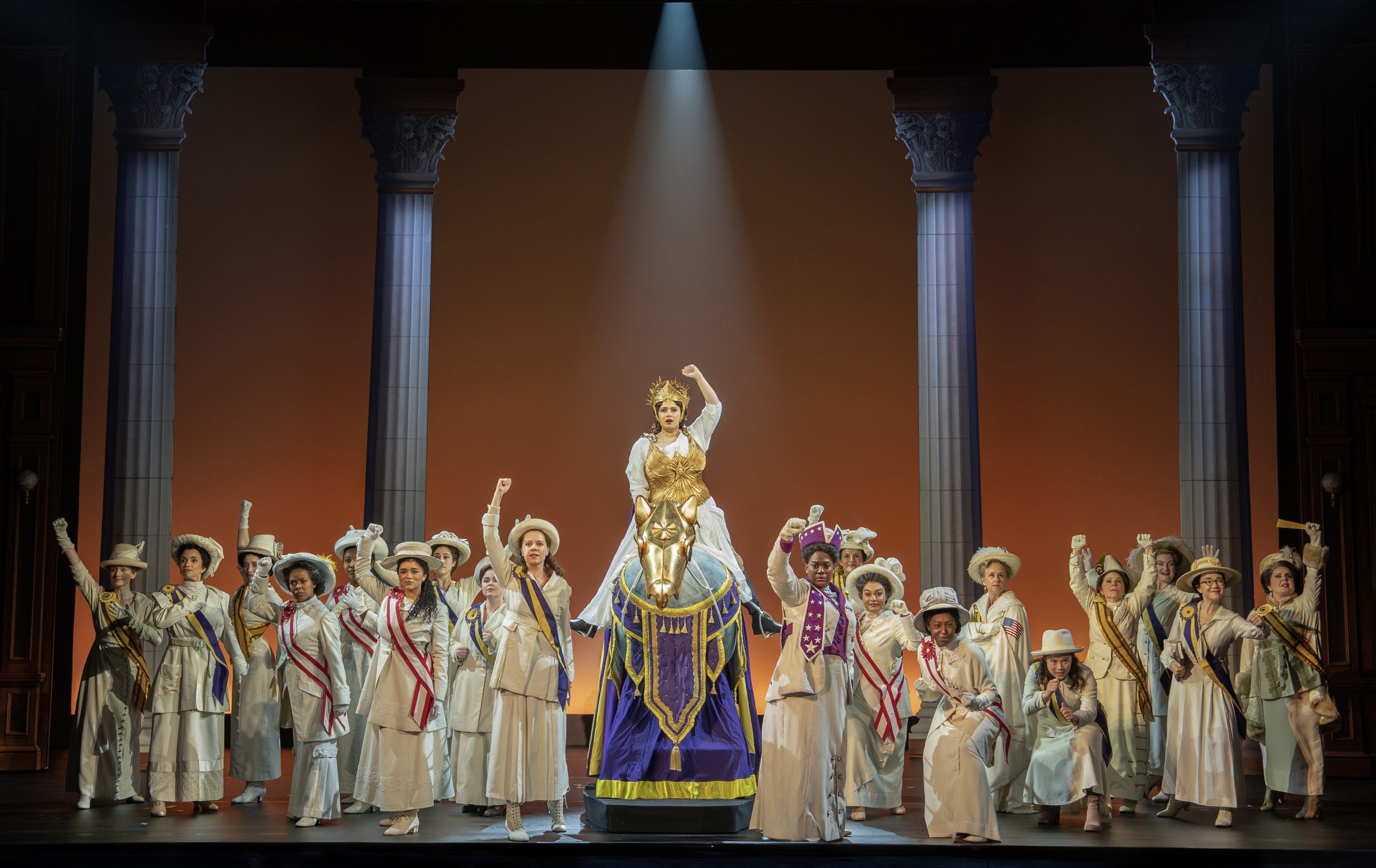
Broadway in Boston production
Suffs is a Broadway musical that tells the story of the final years of the women’s suffrage movement, starting with the organizing of the 1913 March on Washington and ending with the 1920 ratification of the 19th Amendment, which removed the barrier of sex (but not necessarily factors such as race) from the right to vote.
The book (script), music, and lyrics are the work of Shaina Taub, who also plays the role of Emma Goldman in the currently running Ragtime on Broadway. In the Broadway production of Suffs, Taub played Alice Paul, the young upstart who questions the tactics of the National American Woman Suffrage Association (NAWSA), which had been slowly working since 1890 on a state-by-state strategy to secure suffrage for women. Taub won numerous awards for Suffs, including two Tonys, three Outer Critics Circle Awards, and two Drama Desk awards. But Suffs is not merely the story of Alice Paul. It’s the story of a movement, and the conflicts that drove it and inspired it.
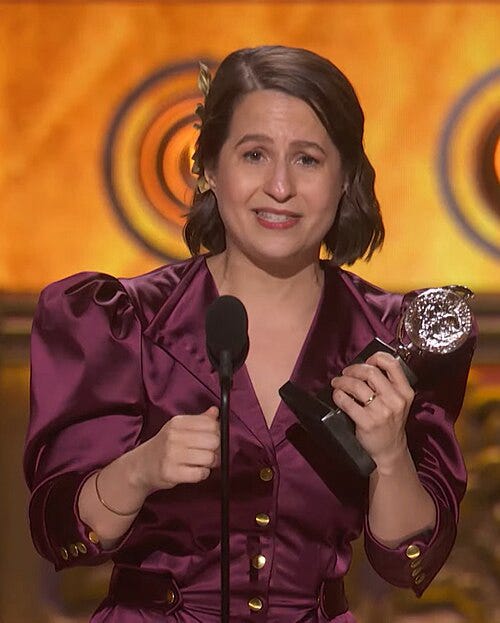
Shaina Taub
(The name of NAWSA itself is the result of earlier internal conflicts within the suffrage movement: the National Women Suffrage Association, led by Susan B. Anthony and Elizabeth Cady Stanton, opposed the 15th Amendment, which gave voting rights to African American men, unless it included a provision to provide women the right to vote; the American Women Suffrage Association, founded by Lucy Stone and Julia Ward Howe, among others, supported passage of the 15th Amendment, believing that passage would pave the way to women’s suffrage. The split in these organizations splintered the women’s suffrage movement for more than twenty years.)
The conflicts within the movement are many. Paul challenges the gradualist, “ladylike” approach of Carrie Chapman Catt, long-time leader of NAWSA. Black scholar and teacher Mary Church Terrell and famed anti-lynching activist and journalist Ida B. Wells disagree over how to respond to white organizers’ acquiescence to white southern women’s demands for a segregated march. Even among the younger white activists there are disagreements over tactics: the very concept of public demonstrations frighten some of the women while labor organizer firebrand Ruza Wenclawska wants to “burn it down.” (Spoiler alert: She finally gets her wish when the suffragists burn Wilson in effigy in front of the White House.)
All of this is conveyed with compelling characterizations and surprising historical details. True, the lyrics are sometimes repetitive, but they are written to educate as well as to entertain. There is much that is historically accurate in this telling, but a few things that are left out or altered. Dudley Malone, a member of Wilson’s administration, really did resign in protest to Wilson’s opposition to suffrage. On the other hand, Alice Paul and her loyal sidekick Lucy Burns did not meet while playing field hockey in college as portrayed in Suffs. They met in England, where both were involved in the British women’s suffrage movement, learning the radical tactics they would employ in the United States from the innovative risk-takers Emmeline Pankhurst and her daughters Christabel and Sylvia.
Crucial to advancing the amendment for women’s suffrage was winning President Woodrow Wilson’s support. While Wilson claimed that it was the polite and ladylike tactics of NAWSA that convinced him to support the amendment, it’s clear that Paul and her allies created visibility for their cause that eventually pushed Wilson to pretend to support the suffrage movement, even as he snidely told Catt that he doubted the amendment would win ratification from the states.
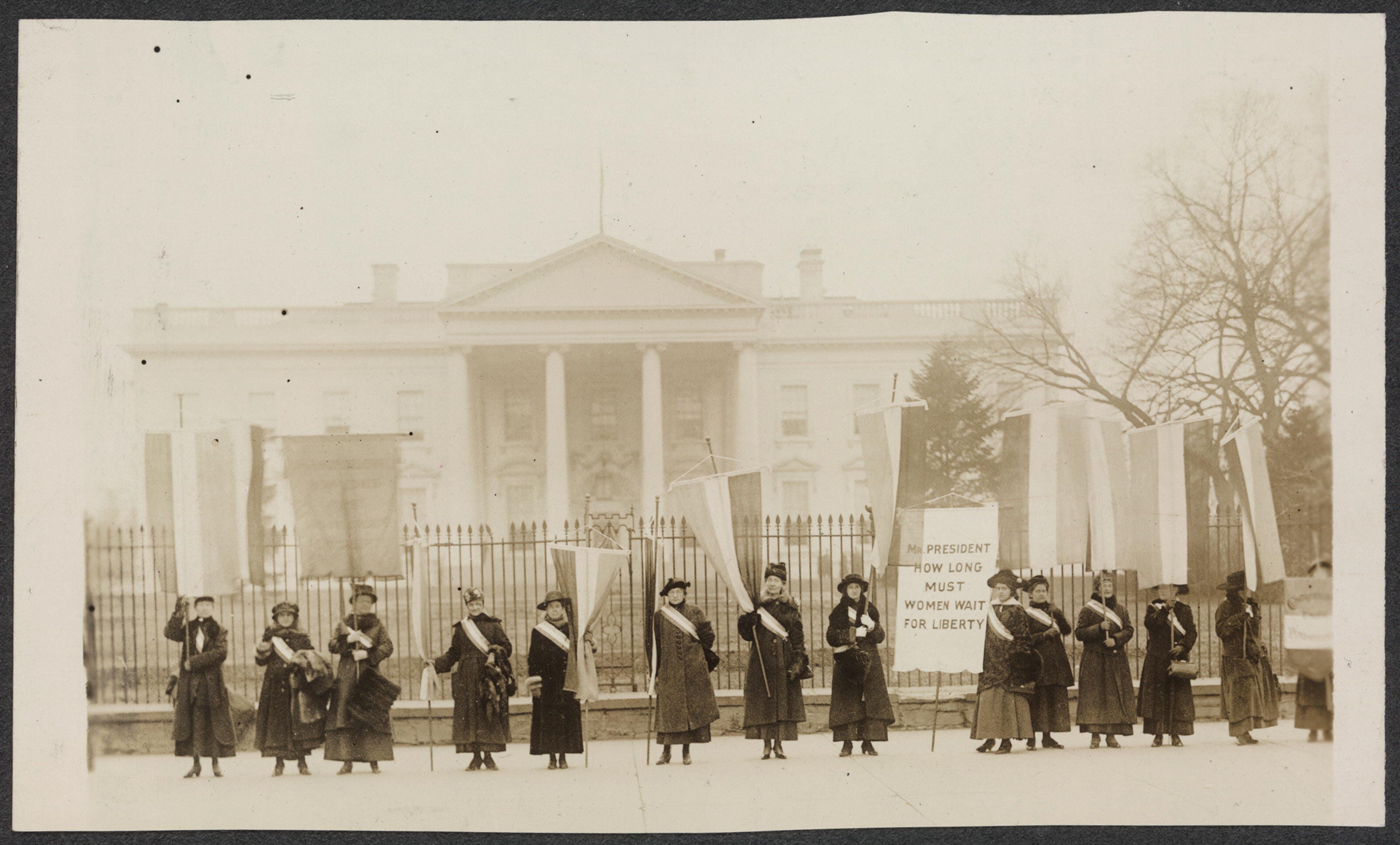
Library of Congress: Suffragists holding suffrage banners in front of the White House, considered extremely un-ladylike at the time
I’m thrilled that I will have the honor of presenting the award for OUTSTANDING VISITING MUSICAL to the Broadway in Boston production of Suffs at the Elliot Norton Awards ceremony in Boston on June 1.
If you didn’t have a chance to see the show in Boston or New York, or if you’d like the chance to see it again, you can watch it on PBS Great Performances if you are a PBS sustaining member with access to Passport. (And if you are not a PBS sustaining member, please become one—they need you more than ever. Check with your local station for details. In greater Boston, it’s here.)
I'd love to see both Suffs and Ragtime, especially since Emma Goldman is a character in both. Thank you for this review!